Pangishimo Park
Client
Zibi
Location/Emplacement
Chaudière Island, Ottawa
Completion/Livraison
2021
Award/Prix
Ottawa Urban Design Award, Public Places and Civic Spaces - 2021 Award of Merit
-
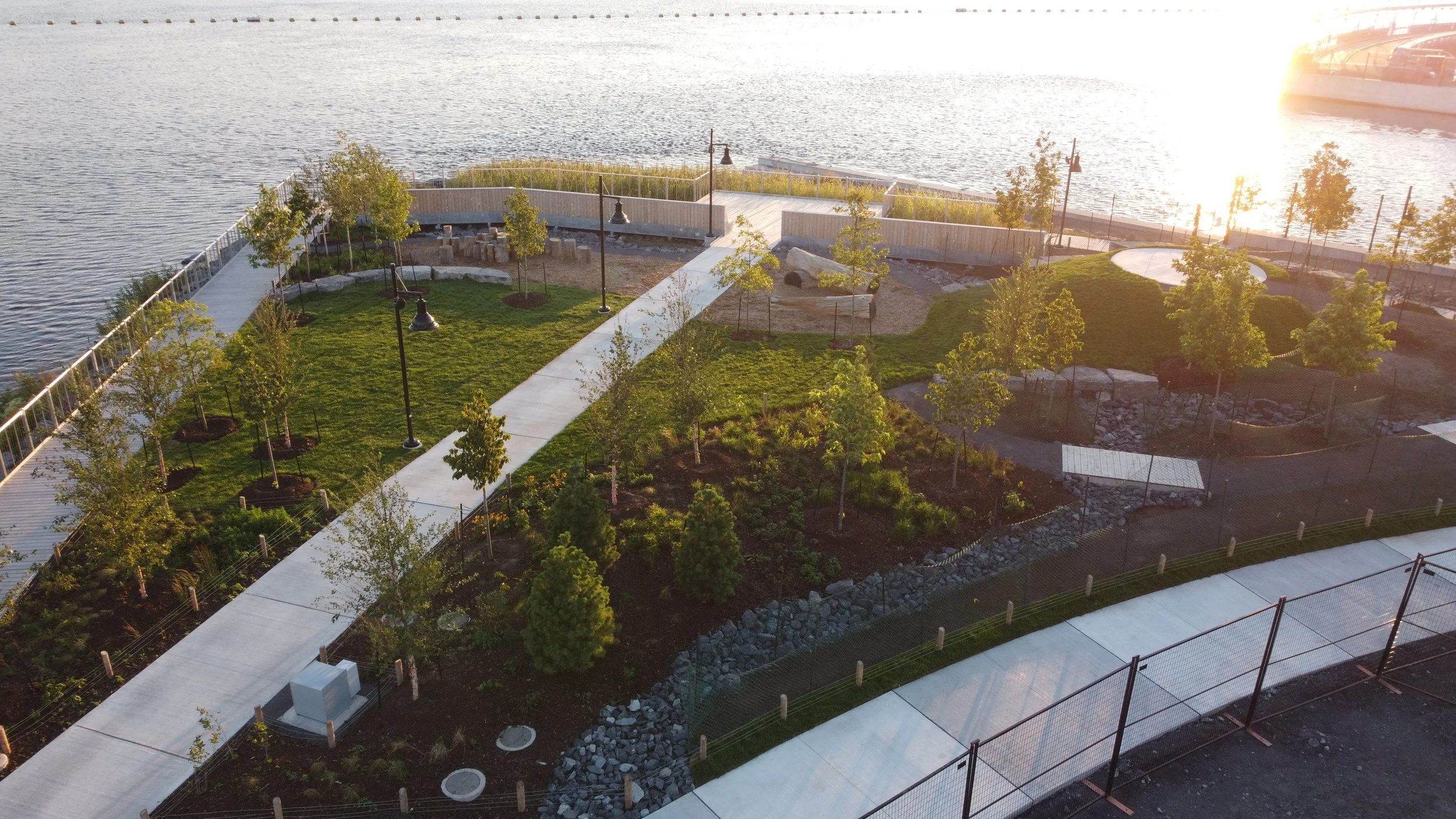
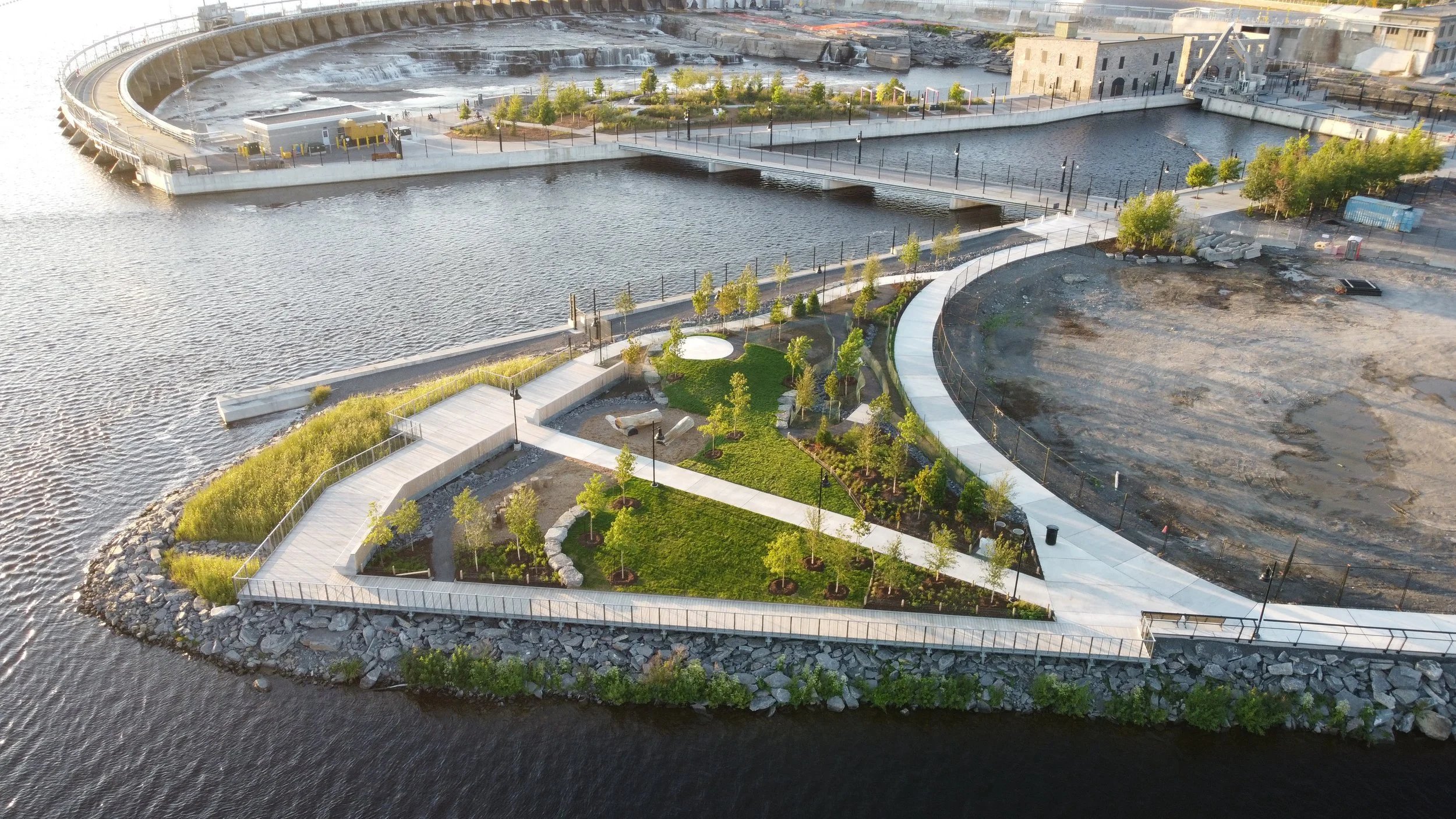
The Algonquin Anishinaabe word for ‘sunset’ is ‘pangishimo,’ making the name Pangishimo Park perfect in reflecting this park’s location on the western point of Chaudière Island along the Ottawa River. Located in the innovative, sustainable, mixed-use urban community known as Zibi, Pangishimo Park was designed in conjunction with its sister park, Mokaham – or Sunrise Park – on the eastern point of the island.
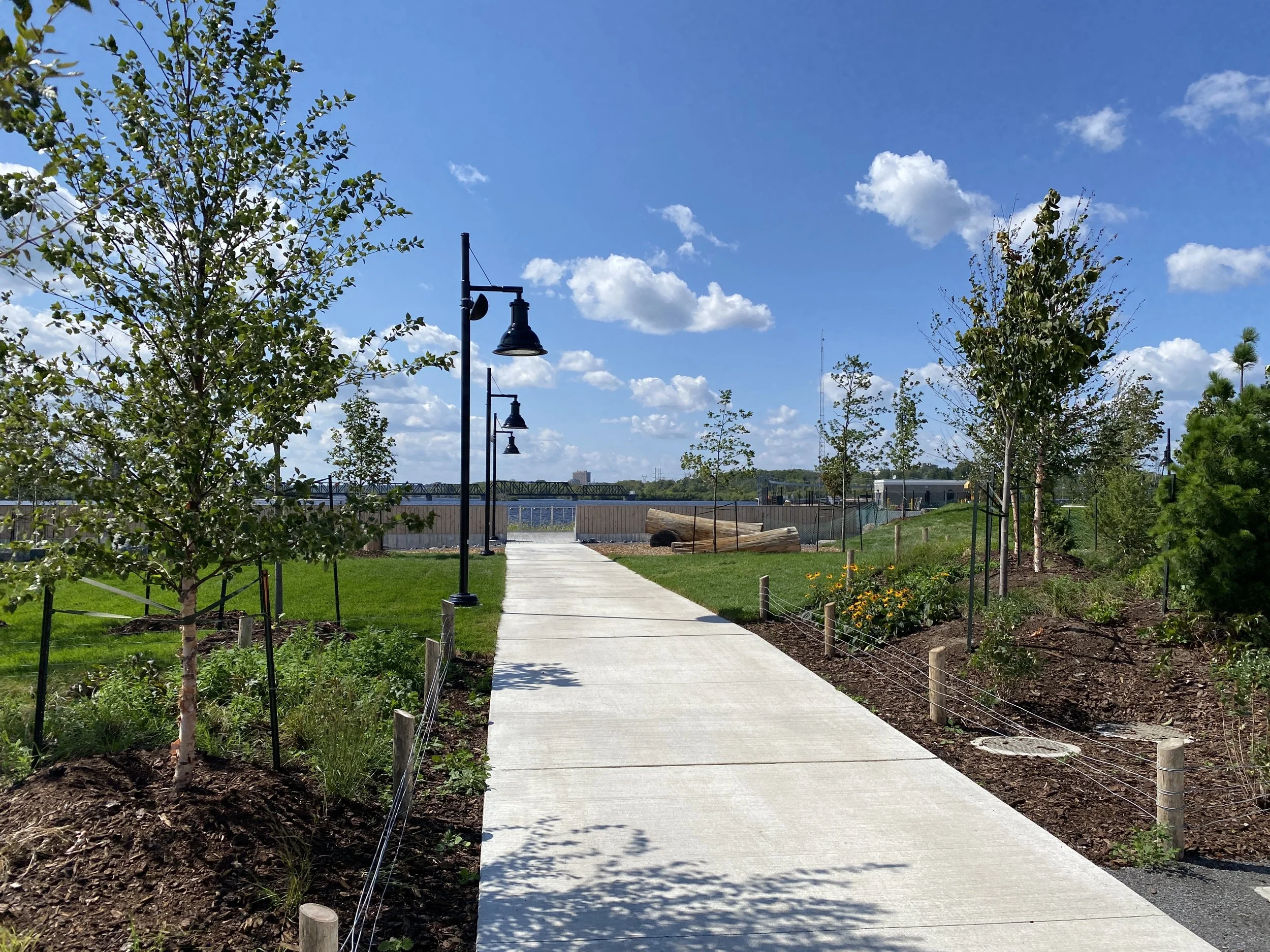
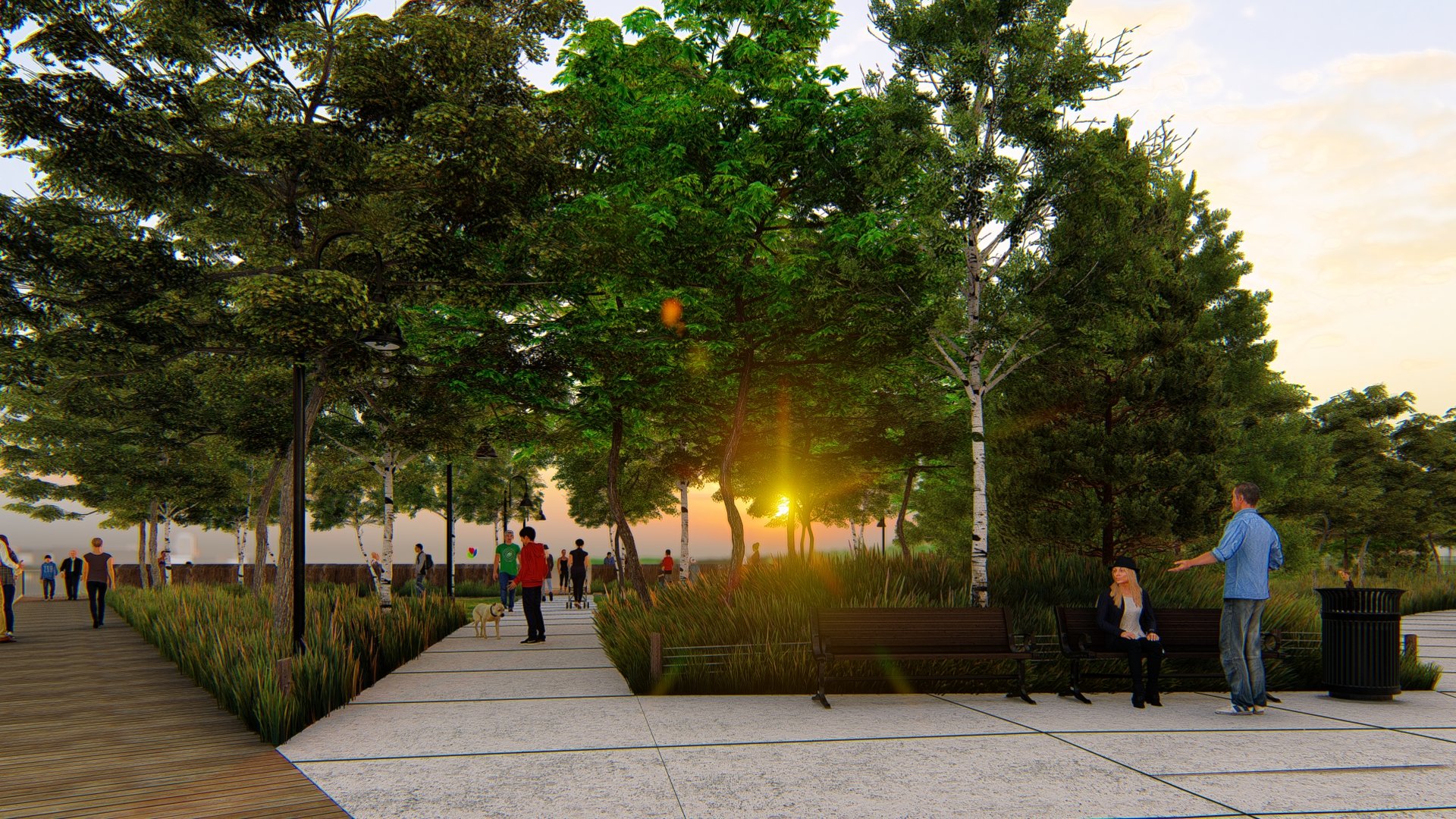
The naturalized plantings and organic forms of the park’s landscape combined with the hard-edged steel frame boardwalk reflect the site’s extensive history, beginning with the First Nations’ connection to nature and its proximity to the revered Chaudière Falls, and more recently the Colonial industrial lumber mills and logging along the Ottawa River. Through numerous design workshops and engagements – in addition to a multi-year consultation with numerous stakeholders including Algonquin Anishinaabe representatives – the concept of creating a space that established a sense of home and nostalgia for Algonquin community members, balanced with the need to create an inclusive space for all community members, was imperative. As such, a focus on using locally sourced, sustainable, or salvaged materials where feasible, as well as a native plant material palette, led the design. The use of native plant material creates a landscape reminiscent of pre-development natural lands along the river and through Algonquin territory, with recognizable seasonal interest, colours, and smells.
With the park bordered by the Ottawa River on three sides, its concept strives to create a ‘living experience’ for the visitor, establishing a sense of discovery and intrigue as one moves through the site. The strong, angular boardwalk and lounge seating create a border reminiscent of industrial forms to frame the soft interior of the park without interrupting the transition to the water’s edge. The interior of the park introduces rolling topography, natural climbing structures and open, free play space for community interaction and events. The outer edge of the park, the boardwalk, is framed with a long straight lounge bench that establishes refuge from the active interior space of the park. All visitors can safely enjoy the park thanks to the addition of accessible routes and open views.
-
Le terme algonquin anichinabé pangishimo, signifiant « coucher de soleil », a inspiré le nom du parc, situé à la pointe ouest de l’île Chaudière, en bordure de la rivière des Outaouais. Ce parc fait partie d’une trilogie d’espaces publics créés au sein du quartier durable et mixte de Zibi. Il a été conçu en relation étroite avec son parc jumeau, Mokaham — le parc du lever du soleil — situé à la pointe est de l’île.
Les plantations indigènes et le vocabulaire organique du parc, combiné à la promenade en bois, font écho à l’histoire du site. Elle est marquée par la relation ancestrale des Premières Nations avec le territoire, la présence des chutes de la Chaudière et plus récemment avec les scieries industrielles liées à l'exploitation forestière le long de la rivière des Outaouais. Grâce à de nombreux ateliers de conception et de consultations pluriannuelles avec de nombreuses parties prenantes, y compris les représentants des Algonquins Anichinabé, il a été permis de créer un espace qui suscite un sentiment d'appartenance chez les membres de la communauté algonquine, tout en créant un espace inclusif pour tous. C'est pourquoi la conception a été guidée par l'utilisation de matériaux d'origine locale, durables ou récupérés dans la mesure du possible. Le paysage créé rappelle le lieu avant le développement urbain, communiant avec la rivière et le territoire algonquin, avec un intérêt saisonnier, aux couleurs changeantes et aux odeurs reconnaissables.
Bordé par la rivière sur trois côtés, le parc propose une progression spatiale fondée sur la découverte. Les cheminements et banquettes en bois massif rappellent le passé industriel et structurent un jardin intérieur aux formes souples. La topographie vallonnée accueille des structures d'escalade naturelles et un espace de jeu libre. Le long de la rivière, la promenade est encadrée par un long banc droit qui ouvre les vues sur celle-là. Les visiteurs peuvent profiter du parc en toute sécurité et contempler le magnifique coucher du soleil.